
 Logos Kit
Worked example: testimonials
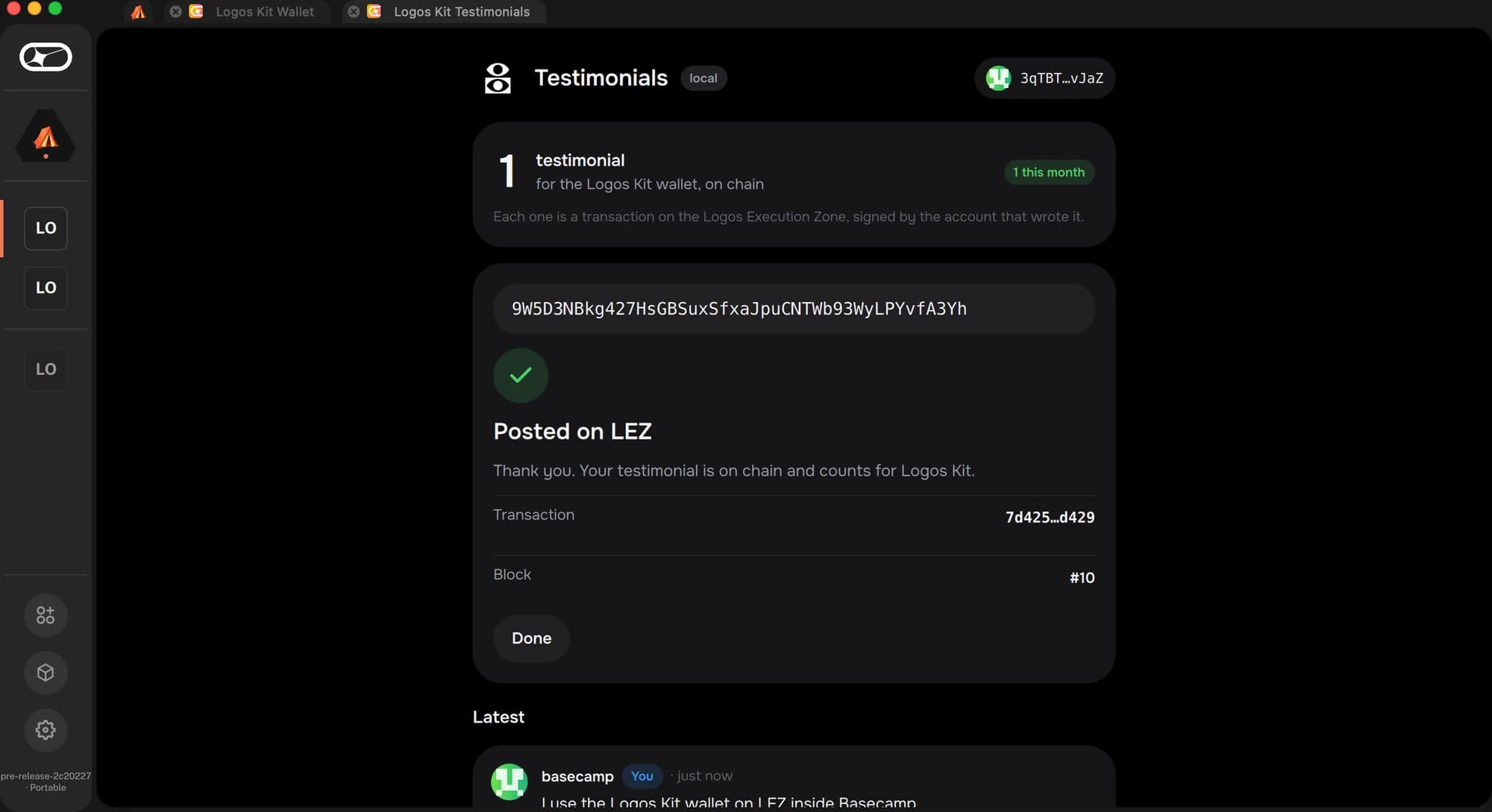
The testimonial app, step by step: connect, account selection, approval, transaction.
Logos Kit Testimonials (modules/logos_kit_testimonial) posts a short
testimonial to a LEZ program that stores it on chain, and shows what others
wrote. It's the SDK's reference integration: every step of connect → account
selection → approval → transaction, with the states around it.
The program
A standard LEZ program (programs/testimonial) keeps one record per
(submission, author) and paged stats with monthly counts. A post carries the
text (≤ 280 bytes), an optional username (≤ 32 bytes) and the submission id
LP-0021/logos-kit, and the chain checks its timestamp against the block
time. Each account posts once. The author signs and pays the fee, so a post is
always public.
On the official testnet it's deployed as an immutable program,
5YoH3xjhgeKt2mcJXW7c31bqDNCWWA4CRJxVdvzFvVef
(TESTIMONIAL_PROGRAMS["lez:testnet"]). Posts there count for LP-0021
adoption; posts on the preview network don't.
1. Connect: the user picks the account
kit.api.connect({ accountKinds: ["public"] }).then(useSession, function (e) {
    root.note = kit.sdk.isUserRejection(e) ? "" : errText(e)
})
The shell routes lez.wallet.connect to the wallet, which asks which account
to share. The app only ever sees accounts the user picked. On start, the app
calls getSession() to restore an earlier connection without a prompt.
2. Read before asking
Before showing the composer, the app reads three things through the wallet:
kit.api.getWalletBalance(account)             // enough for the fee?
kit.api.readAccount(account, programId)       // nonce: has it been used?
kit.api.getTestimonial(programId, account)    // already posted?
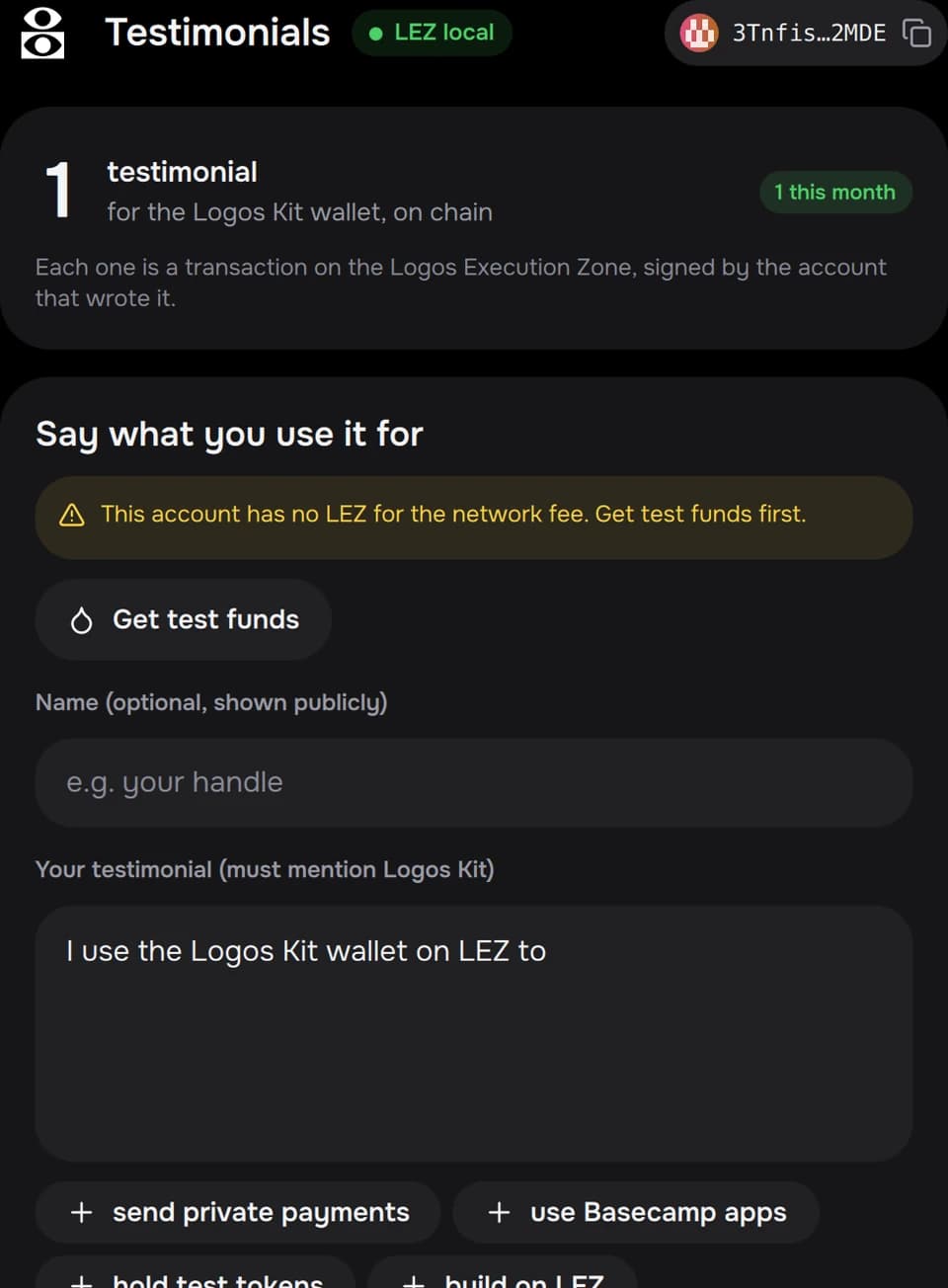
That decides the state: already posted (show it), no funds (offer test
funds in place: kit.api.requestFunds(account)), a fresh account (a gentle
nudge: posts from accounts with real use count for more), or the composer.
3. Compose, and validate like the chain does
The app checks what the program would refuse, before the user approves anything: byte length (not characters), blank text, control and direction-override characters. It also requires the text to name the wallet, since testimonials count for the wallet they name.
4. Propose: the user approves in the wallet
kit.api.postTestimonial({ program: programId, author: account, text: text, username: name })
    .then(function (r) {
        root.watcher = kit.api.watchTransaction(r.handle, onStatus)
    })
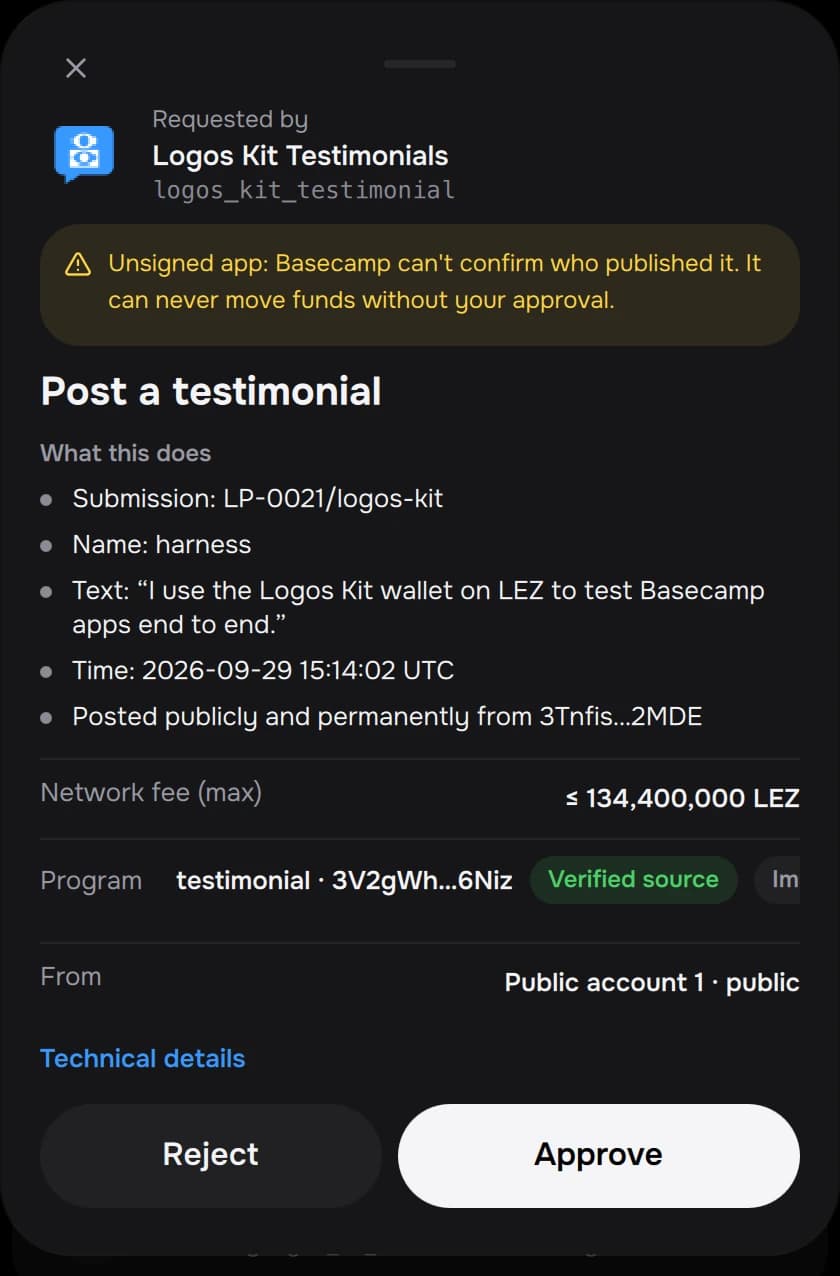
postTestimonial finds the open stats page and builds the call. The wallet
shows the approval: the program (with its source-verification and upgrade
status), the fee, and the decoded post. The promise resolves once the user
approves, with a handle; inclusion comes after.
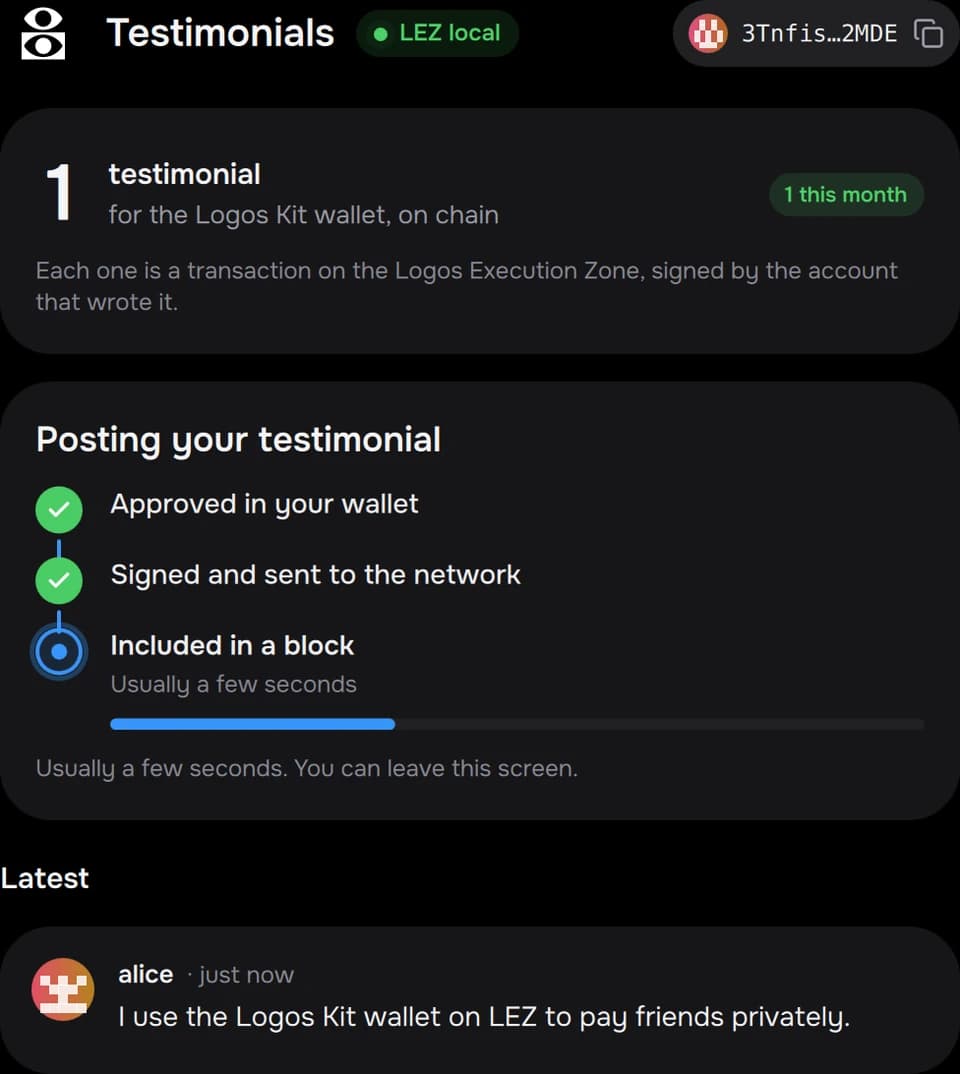
5. Follow the transaction
function onStatus(s) {
    if (s.lifecycle === "included" || s.lifecycle === "finalized") {
        if (s.outcome === "success") done()
        else if (s.outcome === "failure") recheckAfterReject(s)
        else confirm()                       // included, outcome unknown: the record decides
    } else if (s.lifecycle === "rejected" || s.lifecycle === "dropped" || s.lifecycle === "expired") {
        recheckAfterReject(s)
    }
}

// Unknown outcome: read the author's record. Our post there means it landed.
function confirm() {
    kit.api.getTestimonial(programId, account).then(function (t) {
        root.phase = t && t.text === root.text ? "done" : "unconfirmed"
    }, function () { root.phase = "unconfirmed" })
}
Only success, or the record itself, shows Done. Otherwise the app shows
Not confirmed yet with a re-check, never a second post. A rejected post
can still mean the account already posted (another device), so the app reads
the record again before calling it a failure.
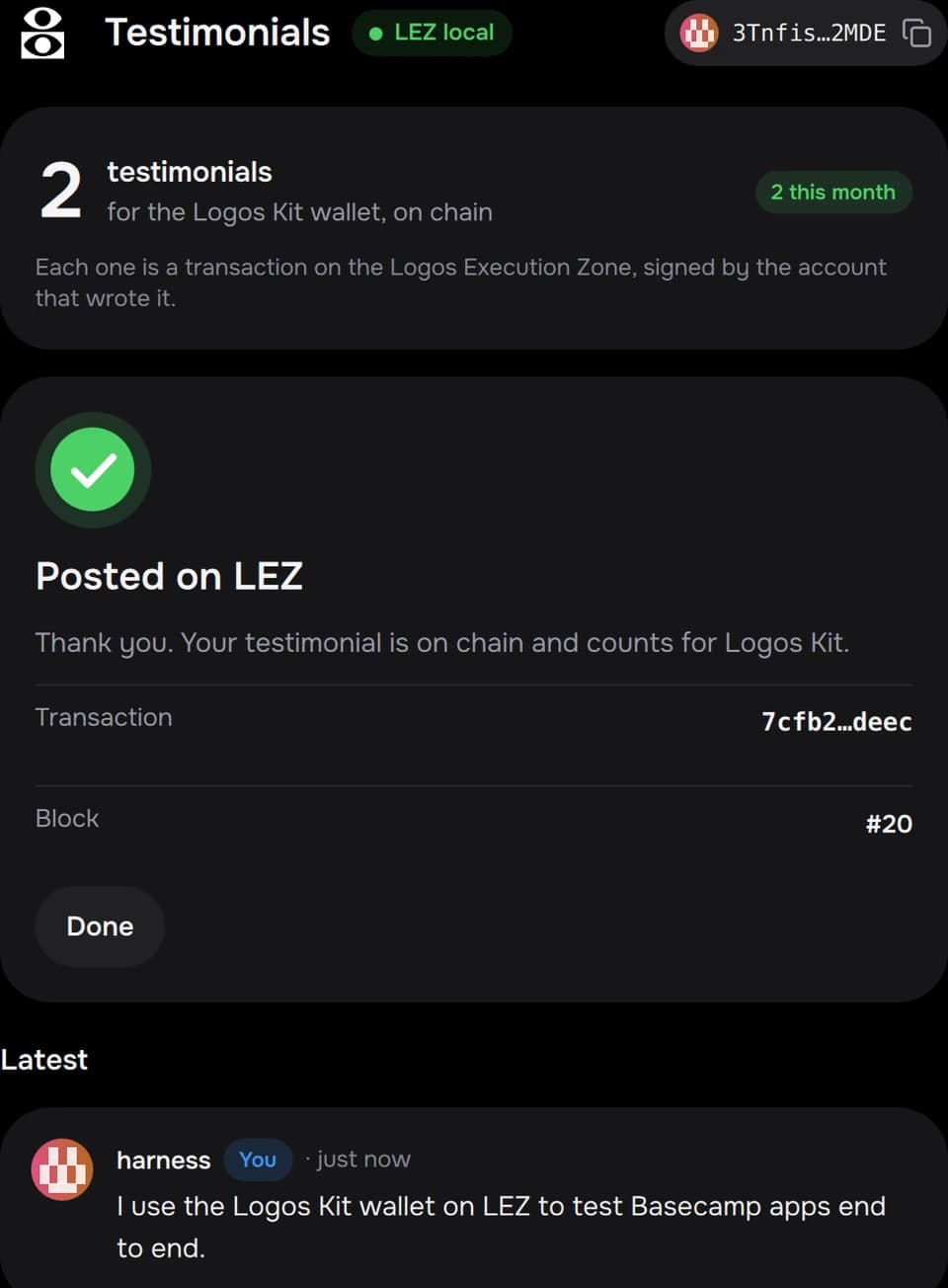
When it's done, the app shows the transaction and block, and
kit.api.openExplorer({ txHash }) opens it in the user's browser (the QML
sandbox can't open links; the wallet builds the URL).
The feed
kit.api.getTestimonials(programId, { limit: 25 }) // { count, monthly, latest }Everything comes from chain data: the count, this month's tally and the newest posts, decoded from the program's accounts.
Run it yourself
just e2e-testimonial-app # local sequencer, program deploy, the whole flow in the dev harness