
 Logos Kit
Private transfers
Shield, deshield and private sends: what changes for your app.
Private transfers use the same calls as public ones. What changes is time: the wallet proves them on the user's machine first.
// Into the user's own private account (a shield):
kit.api.transfer(publicAccount, privateHandle, "5000")
The route (shield, deshield, private-to-private) follows from the accounts; see Accounts.
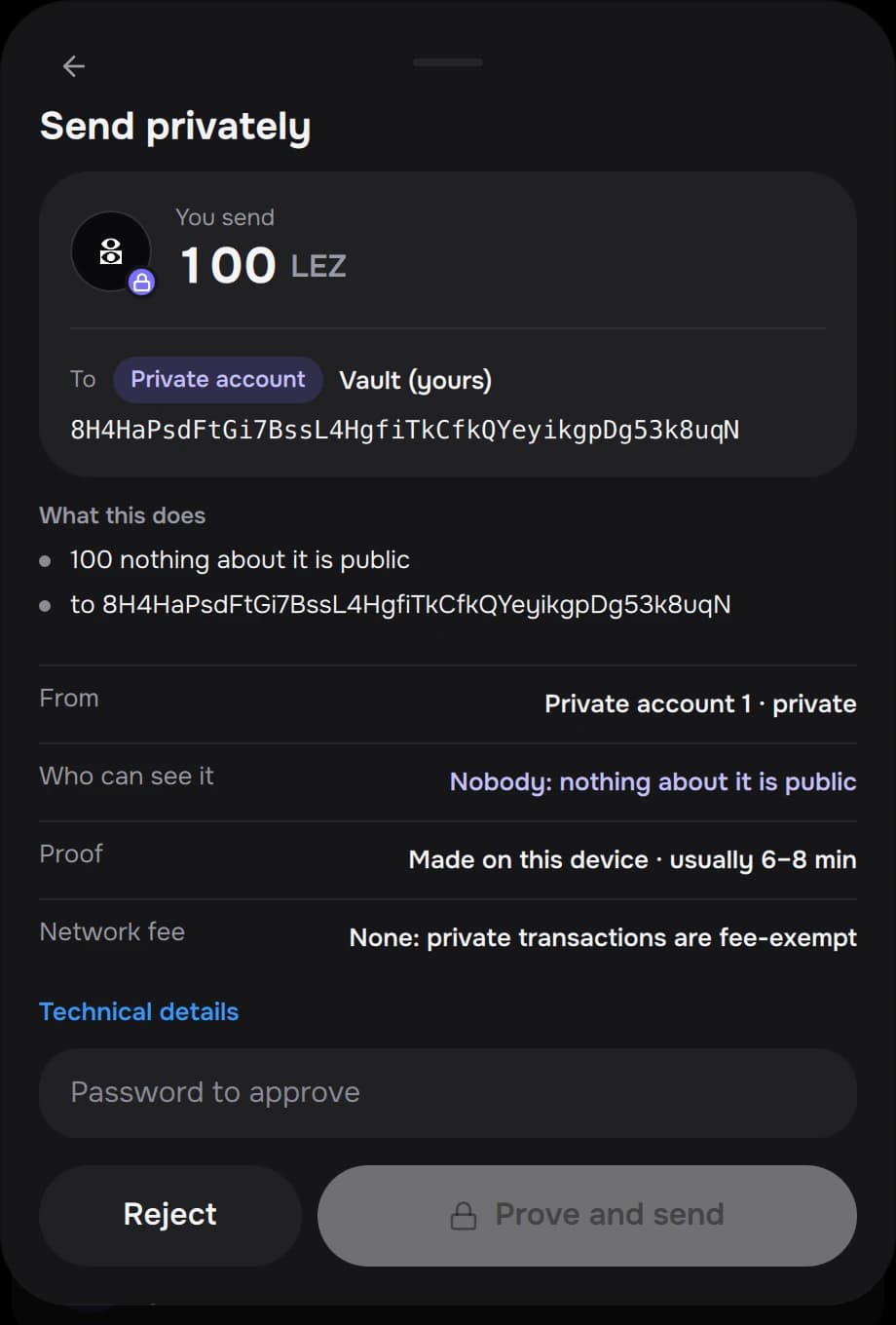
Design for minutes, not seconds
transfer()resolves at approval. Proving comes after.- The status goes
building → proving → signing → submitted → included, andstatus.proving.phaseupdates while it proves. - Proving takes about 4–7 minutes on an M-series Mac and ~4.3 GB of memory.
- The user may close your app: the proof keeps running in the wallet. When your app opens again, follow the same handle (keep it with your state).
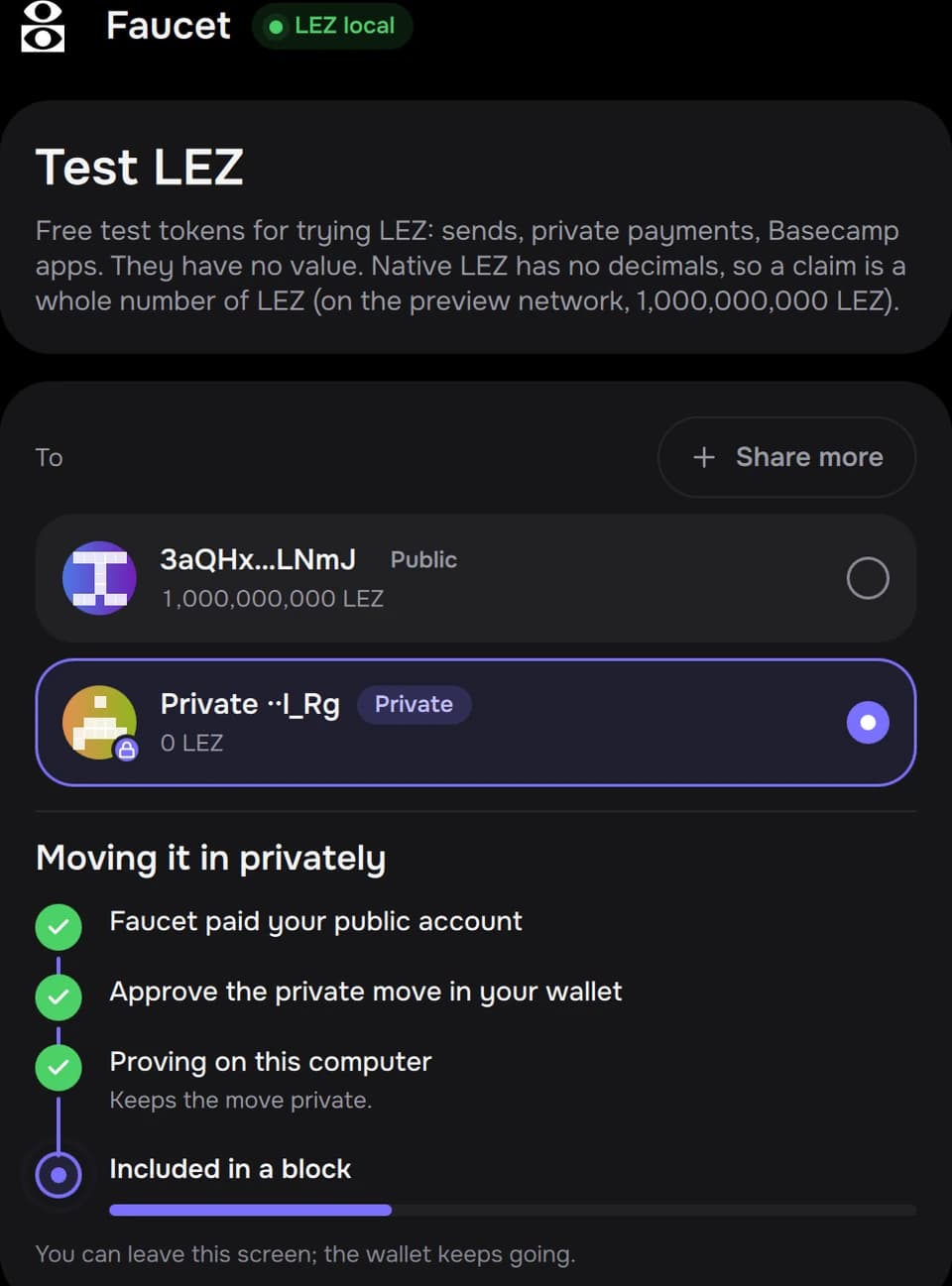
Confirming the outcome
For private routes, the wallet confirms the outcome from its own
account: the private balance moved by exactly the amount. A shield into the
user's account usually ends success. If a note arrived at the same time, it
may end unknown: re-read the balance.
Reading private balances
getWalletBalance(pvtHandle) answers only if the user shared that private
account with your app. While the wallet catches up with the chain, synced is
false; show "Syncing" rather than a stale number.